Specialist air
Dangerous Goods Air Freight.
IATA-compliant dangerous goods air freight: classification, UN packaging, labelling, shipper's declarations and lithium battery shipping done correctly first time.
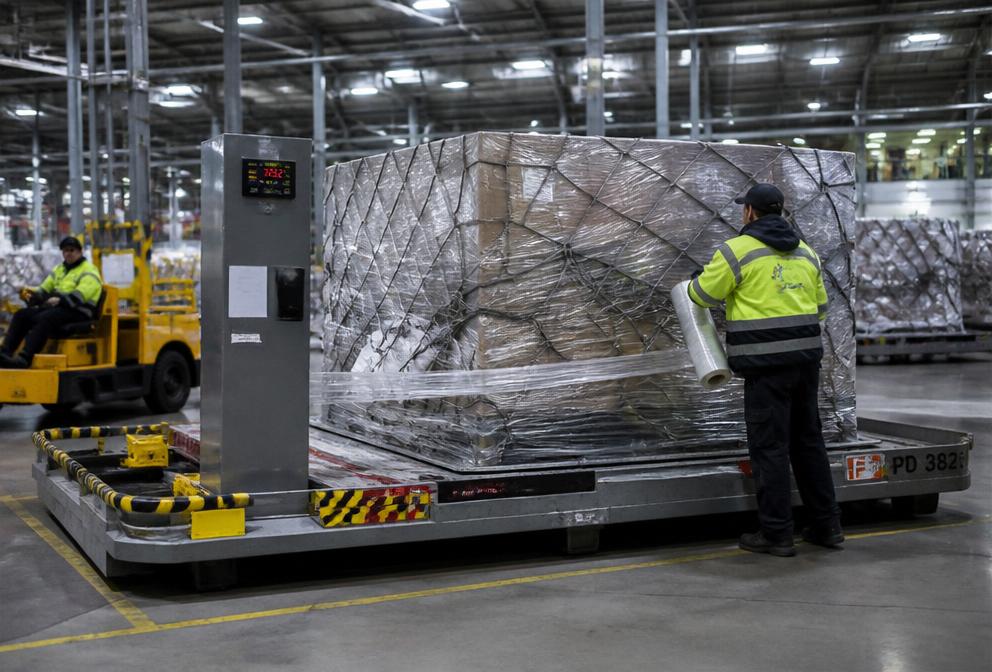
Dangerous goods by air are governed by the IATA Dangerous Goods Regulations, and airlines apply them without discretion. A mis-declared consignment is refused at acceptance, and a hidden one is a criminal matter. The good news is that most regulated cargo — paints, adhesives, batteries, aerosols, cleaning chemicals, perfumes, laboratory samples — is entirely shippable once it is classified, packed and documented properly.
The process begins with the safety data sheet. From it we establish the UN number, proper shipping name, class, packing group and permitted quantity per package, then confirm whether the substance may fly on a passenger aircraft, on cargo aircraft only, or not at all. We then specify UN-approved packaging, apply the correct labels and orientation arrows, and prepare the shipper's declaration for signature.
Dangerous goods air freight guide rates
Airline DGR surcharges vary by class and routing and are confirmed at booking.
| DGR handling fee per shipment | From £145 |
| Shipper's declaration preparation | From £85 per declaration |
| Under 100kg chargeable weight | From £7.20 per kg |
| 100kg and over chargeable weight | From £5.40 per kg |
| UN-approved packaging supply | From £45 per package |
| Lithium battery section II shipment | From £165 per shipment |
These are indicative rates. Contact us for precise rates.
Lithium batteries
Lithium batteries are the most commonly mishandled air cargo in the world. Whether a shipment falls under Section I or Section II depends on watt-hour rating, cell versus battery, and whether the batteries are loose, packed with equipment or installed in equipment — and each combination carries different packing, labelling and documentation rules. Send us the battery specification and quantity and we will tell you precisely which rules apply before you pack anything.
How the booking process works
Every dangerous goods air freight booking with NLX Logistics follows the same simple sequence, and you keep the same reference number and the same contact from the first email to final delivery. You send us the details, we send you a written quotation, and once you are happy we confirm space and issue a booking pack with everything you need to prepare.
We never ask for paperwork you do not need, and we never spring charges on you at destination without warning. If a cost is likely to arise at the other end — terminal handling, customs examination, quarantine inspection, storage after free time expires — we tell you about it in the quotation so you can budget for it rather than discover it later.
- Send us the details and we reply with a written price, usually within the hour
- Confirm the booking and we reserve space on the next suitable departure
- We arrange UK collection or you deliver to the port, terminal or warehouse
- We lodge the UK export declaration and issue the transport document
- You receive sailing or flight confirmation, tracking and arrival notification
- Our destination agent handles import formalities and onward delivery if instructed
Documents and information we will ask for
Good paperwork is what keeps freight moving, so we front-load it. For commercial cargo we need a commercial invoice and packing list, your EORI number, the commodity codes and the incoterms you have agreed with your buyer. For vehicles we need the V5C or bill of sale, photographic identification for the owner and the keys. For personal effects we need a detailed inventory and, where relevant, evidence of residence.
If anything is missing we will tell you exactly what to obtain and where to get it. We would far rather spend ten minutes on the phone before the cargo moves than deal with a detention charge at destination because a certificate was never applied for.
Insurance, liability and protecting your cargo
Standard carrier liability is limited by international convention and is calculated on the weight of the cargo rather than its value, which means an expensive, lightweight shipment is barely protected at all. We therefore recommend all-risks marine cargo insurance on the declared commercial or replacement value of every consignment, which we can arrange at the point of booking for a small percentage of the insured value.
Cover runs warehouse to warehouse, includes general average contribution, and is underwritten on Institute Cargo Clauses A for most cargo types. Claims are handled with a single point of contact, and we will help you assemble the survey report, photographs and commercial evidence a claim requires.
Why shippers stay with NLX Logistics
Transparent guide pricing before you commit, in-house customs clearance, UK-wide collection and a named freight specialist who answers the phone. Move more. Worry less.